Saturday, April 11, 2009

A Happy Easter to all my friends in Malta and overseas


I must admit that this blog thing has become part of my life. Thanks to internet, e-mail and this blog I managed to create an international network made up mostly of poets and poetry lovers, but not only. Recently I am also uploading some nice photos of the Maltese Islands for my overseas friends to see.

It is Easter 2009 and some of my friends sent me greetings messages and two of my poets friends from Greece send me Easter cards which I am publishing on my blog. Thanks Zacharoula Gaitanaki and thanks Zanneta
Kalyva-Papaioannou!! I want to reciprocate by wishing ALL of my friends from different countries, including Malta, a HAPPY EASTER. I don't want to forget though those less fortunate who aren't living a life so comfortable, including our Italian neighbours from Abruzzo (L'Aquila) who have suffered a strong earthquake.

Tuesday, April 07, 2009

Beautiful corners from Gozo


An island for all seasons. Nature and culture. Sea and countryside. Religion and free time.


A paradise for architecture lovers.


For the tourist who is in search of a relaxing
and busy holiday, Gozo in spring is ideal. There are
no huge crowds and no noisy partygoers. The
climate is mild and sunny. It is ideal for those who want
to hike in the countryside or along the coast.
Ideal for those who want to walk in the small
towns, all having something in particular and to
remember.
For those who are in search of night life, I suggest to
wait for the summer season.


Tuesday, March 10, 2009

More photos from the islands of Malta and Gozo


The coast is a spectacular view especially on windy days. The countryside is full of wayside (many of them Medieval)chapels.


Popeye village is a favourite place to visit amongst many tourists. There is also a small fun park for the children and a restaurant, with bar.


Other architectural gems which are found in both Malta and Gozo are the grain wind mills.


Saturday, February 28, 2009

Poetry from Greece - Zanneta Kalyva-Papaioannou


I also received a new book from another Greek poet, Zanneta Kalyva-Papaioannou, from Helioupolis. The books name is A life's notes, with translations in English by Zacharoula Gaitanaki.


A life's notes has 10 poems in English. They all treat the theme of love from the female point of view. Zanneta expresses her sensitivity both as a lover and as a mother. In her poetry she addresses always the "you" who can be a lover and a child. Her language is simple but beautiful, honest and clear as nature and Spring. Hers is an example of positive poetry, treating positive sentiments. Many poems are linked to particular spaces such as Paros' Island, Varkiza and Dilophos.

Poems by Zanneta:
SPRING


Now, that you arrived Spring
and nature is flourishing,
now, that you arrived Spring
and the flower blooms,
love started again
to rouse us.
Bees fly
from flower to flower,
gather the scent
and treat us honey.
The scent of flowers
make us wake up,
love caught us
and we are all... in love!!!

TOGETHER on the MOUNTAIN


Together on the mountain
we met one day,
we were wandering,
picking the best wild flowers.
We were playing with a daisy
"you love me?" "you don't love me"
but I'll always remember
when you started kissing me.
You were telling me tender, beautiful
and teasing words.
I passed my time joyfully
and I felt loving you much more.

More poems from Eftichia Kapardeli (Greece)


Some weeks ago I received more post from Greek poet Eftichia Kapardeli. I feel very near people like Eftichia, Zacharoula Gaitanaki, Zanneta Kalyva-Papaioannou, Stathis Grivas, Nickos Batsikanis and other Greek poets, perhaps because we are people from the Mediterranean or because both countries (Greece and Malta) have an important historical background, or because there is a kind of familiarity between all of us, even though we never met personally, for the time being.

Above right: St. Andrious Cathedral (the New and the Old), Patras
Below right: Kalogria - Gianniskari

The following are some other poems of Eftichia translated from Greek to English:


CHILDREN'S EYES


The houses of the city tightened

the snow in the roofs stretched out

two lights in the end of the street

two children's eyes

they read the shades

of the persons who were passing

the smell of bread unfolds in air


Thousands of stretched out hands

Thousands of children's eyes asking it.

(Dedicated to the children who have no food)

A POEM


Snow... the last
white flakes
fall on the earth
Castaways resemble
in deserted beach
and the sea white blood

Sunday, February 15, 2009

Photos from Chadwick Lakes and nearby (Malta)


Above right: The Medieval city of Mdina


Fortunately we had plenty of rainy days this winter. Chadwick Lakes are special during such wet winters as they make Malta resemble more European countryside rather than North African dry wastelands. Usually tourists say that Malta is yellow and made of stone, no trees. However, wet winters and springs prove the opposite.
The Maltese Islands countryside is also full of wayside chapels. For those interested visit:

Saturday, February 14, 2009

Intervistat Alfred Palma: poeta u traduttur.

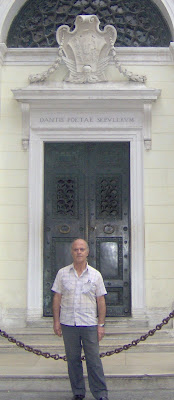
(Fir-ritratt Alfred Palma jidher quddiem il-kappella fejn hu midfun Dante Alighieri, f'Ravenna, Settembru 2008).


1. Il-Malti Semitiku u s-sistema trilittera (ezempju mrabbat flok marbut). Kemm sibthom utli l-aktar fit-traduzzjonijiet tieghek?


Il-Malti Semitku hu ghani hafna, u llum bosta minnu m’ghadniex
nuzawh. Lili dan il-vokabularju vast gheni hafna, l-aktar fit-trad-
uzzjoni tad-Divina Commedia, naturalment minhabba l-istess element
arkajk tieghu. Izda dejjem qghadt attent li fir-rimi dejjem nuza bosta
vokali, biex b’hekk inzomm l-armonija Semitika-Maltija fit-test u dik
Romantika-Taljana fir-rima; b’hekk nemmen li hloqt bilanc ideali bejn
iz-zewg ilsna, Malti u Taljan, u nhoss ukoll li fix-xoghol tradott baqghet
issaltan l-atmosfera tal-grajja nfisha u taz-zmien li fih sehhet, biex
hekk bqajt fidil lejn l-awtur u xoghlu u fl-istess waqt tajt gieh u seddaqt
il-Letteraura Maltija. Is-sistema trilittera dejjem uzajtha fejn hassejt li
kien jaqbel, l-aktar fejn kelli accenti li kienu jaqghu hazin jew jinstemghu
stunati fuq kelma u b’hekk jaghmlu l-vers kollu inqas muzikali milli
dejjem fittixt li naghmlu.

2. Fit-traduzzjonijiet tieghek taghti piz lill-element Semitiku jew lil dak Rumanz l-aktar? Ghaliex?

Tajthom piz tista’ tghid kwazi ndaqs, ghax hassejt li f’xoghol hekk
ggantesk il-bilanc kien essenzjali. Dan jghodd l-aktar ghad-Divina
Commedia u ghad-drammi ta’ Shakespeare; izda fix-xoghlijiet ta’
Wilde u ta’ Voltaire kelli naghfas l-aktar fuq ir-romantiku. Ma tista’
bl-ebda mod tittraduci lil Wilde b’Malti Semitiku ghax tinholoq atmos-
fera letterarja inverosimili, kemm fix-xoghol letterarju nnifsu, u aktar
u aktar f’dik li hi epoka. Barra minn hekk, dejjem fejn jidhol Wilde,
certa sofistikagni titlob hafna l-Malti Romantiku, l-aktar fejn jidhlu l-
battuti celebri ta’ dan l-awtur. L-istess nista’ nghid ghall-Candide ta’
Voltaire.

3. Ghal Palma kif jintrabtu flimkien poezija, muzika u pittura?


Il-poezija, il-muzika u l-pittura huma t-tliet Arti li ddominawli hajti. l-
aktar li taffettwani artistikament hija l-muzika, u kwazi kull poezija li
ktibt kemm ili haj dejjem twieldet minn xi bicca muzika. Peress li
ndoqq il-pjanu u iffissat fuq Chopin, ma jistax jonqos li l-muzika hi
l-pern ta’ kulma nohloq artistikament. Dan jghodd ukoll ghall-pittura.
Meta tigini l-muza ghall-pittura, inkun irrid il-muzika f’widnejja
sahanasitra biex nohloq it-tonalita’ ta’ l-ilwien; u minn dawn l-ilwien
imbaghad naf nislet aktar poezija, li aktarx inkompli nirfinaha b’aktar
muzika. Ghax tabilhaqq, ghalija dawn it-tliet Arti huma tliet ahwa
kapriccuzi li kemm-il darba habbtuni u kwazi gennewni; izda wara
dejjem sibthom bhala katarsi ghall-istess tbatija li jkunu holquli.

4. Xi tfisser tkun awtodidatta?


Awtodittata – certi talenti jitwieldu ma’ dak li jkun; u dan japplika bil-
bosta fejn tidhol l-Arti. Nghid ghalija sa minn meta kont ghadni tifel
zghir kont inhoss gibda naturali lejn it-tpingija; kif nara pjanu kont
intir fuqu u nittanat nsib l-armonija halli ndoqq xi haga, l-istess il-
poezija, kont inhossha go mohhi, bir-ritmi u l-accenti b’kollox; l-
iskola kont nissahhar bit-traduzzjoni, u nhossha ga maqluba ghall-
Malti: kemm innizzilha. Dan kollu, flimkien mal-fissazzjoni li ghandi
bil-qari ippermettewli li nkun hieles u b’hekk inkompli nirfina dak li
tatni n-natura bla ma nersaq lejn l-ebda Universit¿, ghajr dik tal-
Hajja li, fil-fehma tieghi, ma thallilek ebda ittri wara ismek, izda
taghtik is-sodisfazzjon uniku tal-originalit¿.

5. Dik tal-kittieb hija fuq kollox hajja ta' qari u sagrificcju. Kemm hu minnu dan?


Nahseb li jekk hawn xi hadd li jista’ jitkellem fuq is-sagrificcju huwa
jien. Sa mill-bidu tal-karriera letterarja tieghi, u sewwasew ghax
qatt ma rfist fl-ebda Universit¿, l-intellettwali Maltin, li hargu minn
hemm iperrcu l-ittri wara isimhom, ma setghu qatt igerrghu l-fatt li jien
kelli nidhol ghat-traduzzjoni tad-Divina Commedia , u meta stamp-
ajtha, fl-1991 (spejjez tieghi, naturalment), dawn l-istess nies halfu li
jinjorawni ghal kollox. L-istess f’Shakespeare u f’kulma bdejt nittra-
duci. Ghajnuna minn Stat, Banek, Azjendi? Xejn. Ftaqart biex nippub-
blika xoghlijieti. Izda qatt ma qtajt qalbi; anzi l-ghira ta’ dawn l-
indivdwi issoktat taghmilli l-kuragg u, minkejja li baqghu dejjem
jinjorawni, il-premju tas-sagrificcji kollha tieghi hadtu sewwasew f’
Ravenna, l-Italja, meta s-sena l-ohra, bit-traduzzjoni tieghi tad-Divina
Commedia , isem Malta zdied ma’ dawk tal-pajjizi l-ohra li ghandhom
dan il-kapolavur tradott fl-lingwa taghhom.


6. Ghalik personali x'inhi l-mira tal-vera letteratura?


Il-vera letteratura ghandha tkun primarjament Arti; li tpaxxi kemm
lil ruh l-awtur u kemm lil dawk li jaqrawh. Ghandha sservi kemm
bhala taghlim u kemm bhala divertiment. Hi x’inhi l-letteratura: poezija,
drama, traduzzjoni, novella ecc. fiha ghandu jkun hemm messagg,
l-awtur jaghmel dmiru li jeduka, u l-qarrej ghandu jikseb ghallinqas
xi ftit tal-gid minn dak li jaqra. Jiena nemmen li kotba jew letteratura
li tinqara b’obbligu, bhalma mill-istudenti bhala parti mill-kurrikulu,
ftit li xejn thalli frott. Wara kollox, l-Arti mhux kulhadd ihobbha u
japprezzaha, u dizgrazzjatament, minhabba certa apatija sistem-
atika, f’Malta il-kultura hadet diksata sewwa ‘l isfel. L-Arti letterarja,
bhalma f’kull fergha ta’ Arti li wiehed jista’ jimmagina, inhakmet
mill-kilba materjalistika ta’ certi awturi u pubblikaturi li, aktar mil-
leteratura per se, ifittxu biss li jdawru lira. U min jirnexxilu jidhol
f’certi crieki jgawdi u jiffanga, u haddiehor jibqa’ jcejjaq. B’hekk din
l-Arti hekk nobbli issa saret tista’ tghid wahda kummercjali, mili ‘l
boghod mill-ispiritwalita’ li suppost) izzejjinha.


7. Il-kitba li m'ghandhiex piz morali, li ma timmirax biex ittejjeb b'xi mod lill-qarrej, hi letteratura? X'tahseb dwar din it-tip ta' letteratura li qieghda wkoll tigi ppremjata anki lokalment?


Bhal kull hag‘ohra fil-hajja hemm letteratura tajba u letteratura
hazina. Issa drajna li l-Arti kollha minn mindu bdiet tissejjah
moderna, saret taghraf aktar lill-artist (jew lill-psewdo artist) milli
x-xoghol tieghu. Jekk pittur, awtur, muzicist illum jiehu certa fama,
allura xoghlu jilhaq il-quccata artistika, jaghmel isem u l-flus; izda
dan ma jfissirx li x-xoghol hu necessarjament artistiku. Kif ghidt,
illum l-arti kollha cediet (ukoll) ghall-kummercjalizmu sfrenat; u jekk
awtur ikun ‘jirrendi’ ghall-pubblikatur, allura kulma jaghmel, ukoll
jekk ikun kollox barra letteratura (jew hi x’inhi l-Arti) ikun apprezzat
u, kif ghidt tajjeb int, anki jigi ippremjat.


(Frar 2009)

Friday, February 13, 2009

A young poet from India: Ninad Bhangle

I have received a comment directly from Mumbai by an 18 year old student, blogger and poet. I visited his blog: www.ninadbhangle.blogspot.com and must admit that I soon loved what I read. Ninad seem to be a reflective, pensive, sensitive, sincere being, and is still not corrupted by ambition, power and egoism. His verse is about love, altruism, but also poverty and backstabbing. Ninad writes about different aspects of life and this he does regularly. He calls a spade a spade.
I'll be uploading some of his verse and a photo as soon as I'll have his permission.

Sunday, February 08, 2009

More photos from a sister island: Gozo


Xlendi Bay during a windy day in winter is almost deserted. However, being there is a real blessing as one feels part of nature.


The countryside in winter is very pleasant and green. Rainfall these last weeks was abundant and so islanders can experience many magical corners, especially in Gozo.
The salt pans in Qbajjar Bay near Marsalforn.
Salt is still collected in sacks and left to dry in nearby caves.


Gozo is also the island of contrasting colours and forms which go back many centuries in time. Many a writer or poet find refuge and inspiration on this small and peaceful island.


Monday, February 02, 2009

Interview from South Africa - poet Amitabh Mitra


1. How does Amitabh Mitra reconcile medicine, poetry and printing? Is there a balance between the three activities or does one or more of them rule over the others?

Medicine is Science and therefore it has certain laid down rules which one has to follow, it could be an art if one is allowed to play with it which only a few in developed countries do in terms of research. As a trauma surgeon, I deal with violence and aftermath of extreme violence in my daily work. Medicine becomes a chain of events that follow. Poetry and Publishing on the other hand are creative involvements which need words, color and images in a vivid realm. There are no balances, just changing of hats and clicking the mind to different superhighways.

2. Both medicine and poetry are a vocation. How do you react to such a statement?

Medicine is a vocation, it chose me. Poetry can be a vocation only up to a certain limit as words cannot fulfill the desires till the end, it is then the poet goes on to the next step of indulging in visual arts and the cinema.
A short poetry film-
http://www.youtube.com/watch?v=2ujbrnXdXHM

3. Can you describe Gwalior, and the place where you live in the present?


Gwalior is my home town, a small town in Central India, littered with palaces, forts and royal intrigues. I remain a part of that landscape.
One of my art and poem on Gwalior

http://poetsprintery.book.co.za/blog/2009/01/10/gwalior/

I stay in East London which is in South Africa
A poem on South Africa

http://www.boloji.com/poetry/3001-3100/3037.htm

4. Amitabh Mitra, South Africa and sources of inspiration?

South Africa is a young democracy, multicolored in a variety of hues. The contemporary literature movement here has the varied ethnicity one expects, very similar to the literature movement in India with its variety of languages, colors and traditions.

5. You are also editor of New York based Poetry magazine “A Hudson View” which specializes in free verse and abstraction. What is the genesis of this publication, its objectives and its contributors?

‘A Hudson View’ is an international print poetry journal being published by Victoria Valentine in New York, USA. Victoria herself a well known writer and poet also publishes Skyline Review and the Literary House which she edits too. ‘A Hudson View’ is printed simultaneously in USA and South Africa. As its editor, I have encouraged the free verse form and abstraction, ‘landscape poetry’ becomes limited for any poet to a certain stage. We are proud to publish relatively unknown poets from the US, UK, Europe, Southern Africa, Middle East and SAARC countries. We actively participate in poetry festivals worldwide.

6. Amitabh also seems to have found a twin artistic expression together with poetry, painting. How do poetry and painting complement each other for Amitabh?

I illustrate my poems which gives the much needed visual effect a poem needs. It allows you to read the poem again and again.
An Example
http://poetsprintery.book.co.za/blog/2009/01/25/waiting/

7. Internet: a blessing or an obstacle for poets and literature lovers?

I believe Internet is more than a blessing. We could publish poets who could never have been published before the internet revolution. Yes, we still need the print but cyber literature is here to stay.

8. How is Amitabh Mitra as a person, and how does he occupy a normal day?

Poetry, Poetry, Poetry………


9. Last question: love is one of the themes you write about in your poetry. Another theme is the past and memories. Can you elaborate some more about your themes?

I write only Love Poetry because it is the poetry of the man on the street, it is the poetry of strangers and it is the poetry crossing global barriers of caste creed and religion. Love poetry is bliss, for the poet who creates and for the reader who reads it.

Dear poet Amitah Mitra, many thanks for your sincere answers.

Saturday, January 31, 2009

Intervista mal-poeta zaghzugh Andrew Sciberras


(1) X’igaghlek tikteb il-poezija? Kif tiddeskrivi lil poeta? Il-poeta ghandu responsabbiltajiet fis-socjeta`?

Għalija li nikteb il-poeżija huwa bżonn. Jiġu waqtiet f’ħajti li ma nkunx nista’ nrażżan lili nnifsi u bilfors ikolli naqbad f’idejja karta u pinna biex nikteb l-eqqel emozzjonijiet. Fil-fehma tiegħi l-akbar poeta hu Alla, u l-kapolavur tiegħu huwa l-univers. Kull ħlejqa taħt il-kappa tax-xemx trid iġġarrab xi forma jew oħra ta’ tbatija, u dan hu l-misteru tal-eżistenza. Għalhekk il-poeżija tinkiteb biss bid-demm. Jien nemmen li l-poeta ma jistax jibqa’ indifferenti quddiem it-tbatija. Huwa għandu jkun il-leħen ta’ dawk kollha li qed ibatu fis-silenzju. Kellna u għad għandna poeti li għax kitbu kontra kull forma ta’ inġustizzja, batew u għadhom qed ibatu f’ħajjithom. Il-versi tagħhom huma bħal stallett li jferi fil-laħam il-ħaj.

(2) Mill-Ezilju ta’ Ruhi hi r-raba’ antologija poetika li qed tippubblika. Kif twieldet fik din il-kilba biex tikteb il-poezija?

Bdejt inħarbex l-ewwel versi tiegħi meta kont għadni żagħżugħ. Kien il-mibki poeta Carmel Attard li wara li kont urejtu xi xogħol tiegħi kien ħeġġiġni biex nippubblikah. Illum għall-grazzja t’Alla ppubblikajt ir-raba’ antoloġija tiegħi.

(3) Din l-ahhar gabra poetika tieghek kif tvarja minn dawk ta’ qabilha? Hemm sens ta’ kontinwita`?

Bħalma l-ħajja hija vjaġġ li għandha l-proċess naturali tagħha, anki l-poeżija taqa’ taħt dawn l-istess regoli. Il-kontinwità tinsab f’kull ħaġa li titħarrek.

(4) Il-poezija tieghek ixxaqleb lejn il-kumpless u tirrikjedi bagalja kulturali wiesgha biex tinftiehem. Xi tghid dwar dan u x’tahseb dwar il-poezija semplici u diretta?

Dan l-element duwalista tal-kumpless u s-sempliċi mhuwa xejn għajr munita b’żewġt uċuħ. Ħu l-ħajja tal-bniedem, tevolvi mis-sempliċità u timxi lejn il-kumplessità, u finalment, terġa’ lura lejn is-sempliċità. Ċiklu interminabbli li kull essri jrid iġarrab.
Kull forma t’arti fosthom il-poeżija tidħol f’dan il-kwadru, li hu suġġett ta’ din il-liġi naturali.

(5) Inti temmen fil-kitba tal-poezija bhala espressjoni artistika biss, jew thoss li ghandha ggorr fiha messagg ta’ xi tip?

Il-kittieb qed jgħix f’epoka li irrevokabbilment huwa suġġett għaliha. Jekk toqgħod tqis, tintebaħ li hija insinifikanti meta tpoġġiha f’dan l-univers tant vast u fl-istess ħin misterjuż. Kif għidt l-ewwel il-poeta għandu jkun il-leħen ta’ dawk kollha li qed ibatu fis-silenzju, u mhux qed neskludi l-annimali. Fl-annimali Alla ħalla l-marka tiegħu li mhi xejn għajr l-imħabba. Wieħed mir-rwoli tal-poeta hu li bi vrusu għandu jwassal messaġġ ta’ ġustizzja soċjali. Il-poeta għandu jkun il-politiku li mhux f’partit politiku. Fuq kollox nemmen li jekk kittieb – bniedem ma jafx għeruqu, la jaf fejn qiegħed u wisq anqas triqtu. Sfortunatament, ħafna Maltin ma jafux għeruqhom u għalhekk jinsabu fi sqaq mudlam.

(6) Xi tghid dwar il-qasam tal-poezija hawn Malta? U x’tahseb dwar l-Ghaqdiet tal-Malti?

Wasal iż-żmien li l-klikek jinqatgħu darba għal dejjem. Xi wħud jaħsbu li huma omnipotenti u omnisapjenti. Għandna għaqdiet li qed jaħdmu għal rashom. L-awturi jridu jaħdmu flimkien u jaqsmu l-esperjenzi tagħhom jekk veru rridu li l-letteratura tagħna tkompli tistagħna. Wasal il-waqt li xi ħadd jieħu l-inizjattiva li joħloq forum letterarju fuq l-internet fejn il-kittieba jkunu jistgħu jaqsmu xogħlijiethom u jwasslu l-letteratura lil dawk li jużaw dan is-servizz. Naħseb li tkun idea tajba li jinfetaħ post fejn il-kittieba jkunu jistgħu jiltaqgħu bejniethom. F’dan il-post għandu jkun hemm għad-dispożizzjoni dawk il-kotba li ġew ippubblikati biex jintużaw mill-kittieba u mill-pubbliku. Imma l-aktar ħaga importanti hi li nagħtu aktar spazju lill-kittieba żgħażagħ jekk irridu nkomplu nseddqu l-letteratura Maltija.


(7) Fl-antologiji poetici tieghek dejjem tinkludi ghadd ta’ ritratti ta’ certu livell estetiku. Ghaliex dan?

Kull forma t’arti tista’ tippenetra sal-ibgħad irkejjen ta’ ruħ il-bniedem, u dan huwa aktar minn biżżejjed. Jien nemmen li kull forma t’arti toħroġ mill-istess sors, bħal meta għandek siġra bi zkuk differenti, u hawnhekk qed nitkellem fuq ruħ il-bniedem. Id-differenza tinsab biss fil-medjum li juża l-artist. Wasalna fl-assurdità li rridu nippremjaw il-poeżija, imma dan il-fattur ma jissorprendini xejn għax is-sistema qed tħaddan dawn il-kriterji għal bosta raġunijiet. Hekk kif barri jinqatel naqra naqra mill-matador, dan qed jiġri lil ruħ il-bniedem.

(8) Xi tghid dwar l-originalita` fuq naha u l-influwenzi diretti jew indiretti ta’ poeti ohrajn li jixirfu fil-versi ta’ min jikteb fuq in-naha l-ohra, fil-qasam tal-poezija?

Kif għidt l-ewwel taħt il-kappa tax-xemx m’hawn xejn ġdid. Biex nagħti eżempju jien u kittieba bikrija ktibna f’epoka u f’kuntest soċjo-politiku differenti. Rajna d-dinja mil-lenti tagħna, sawwarna kitbietna fuq dak kollu li qanqalna u influwenzana, u wzajna l-għodod li kellna għad-dispożizzjoni. Imma jekk tifli sew taħt il-qoxra, tintebaħ li l-bniedem-poeta tal-bieraħ u tal-lum baqa’ dak li jaħseb, iħoss u jġarrab. Iż-żmien ma neżżagħlux il-libsa tal-umanità tiegħu. Il-bniedem baqa’ bniedem.

Interview with poet Arbind Kumar Choudhary from India


1. I must admit that I found the language you use in your poetry quite different from the usual form . Could you please elaborate a bit ?

A.K.C: Free expressions and free thoughts are celestial fires that compel me to adopt a novel style rather than others style howsoever mighty legends they might be at the literary horizon.
Secondly, my heart does not allow to be a mere puppets of the different literary traditions prevalent amidst the creative milieu across the globe . Thirdly , literary tempo, novel thought and poetic wisdom make a poet different from others.

2. What about the large number of exclamation marks and apostrophes in your poem ? An I right to say that yours is also a poetry of protest ,irony, a poetry which wants to make things move and change ?

A.K.C: The large number of exclamation marks and apostrophes symbolize each moment of breath people inhale for sake of life. The massage of my poetic paysage is not only to savage the wage of the earthly cage but also to arouse sensations and literary whirlwind amidst the human beings as a whole.Exploration,innovation,sensation and imagination are the poetic pearls through which I expect changes in the existing pattern of society.


3. How do you react to this statement?Chaudhary’s poetry is midway between being simple and complex at the same time.”


A.K.C: No doubt my poetry is midway between being simple and complex at the same time.But my poetry is near simplicity rather than complexity.Simplicity of languages, words, expressions etc is my poetic parlance through which complexity is avoided for sake of muse lovers.To convert complexity in to simplicity is the poetic quality of first water.


4. Do you believe that poetry should be only a play of words and art for arts sake,or bear only a message,or both?

A.K.C: The portry is neither a play of words nor art for art’s sake. The muser is for words what wind hover is for small birds. My poetic massage is such bride that becomes a glittering star amidst the wedding parties of words, arts, and techniques .In other words one can say that these wedding parties accompanied with words, techniques, arts and many more in the disguise of poetic trimming multiply the intensity of the poetic beauty.But how to make a bridge with these things is the part and parcel things poets must be acquainted with.

5. Do poets in India have their organizations, publishers and publications where to voice to their poetry? Some examples?

A.K.C: Though there are a number of literary organizations, publishers and literary journals working separately at many places in many languages in India,yet the situation is not satisfactory for the poets in general and peeping poets in particular.
Having gone through their earnest desires I laid the foundation of two international literary associations: International Association of Poets,Essayists and Novelists(2006) and International Haiku Association(2008)(www.kohinoorjournal.com) in India and started voicing the poets through KOHINOOR, a bi-annual international literary journal from January 2007 onwards.My another bi-annual journal AYUSH is going to be launched from January 2009 .The I.A.P.E.N. publication has also started publishing poetry collections. Here is a list of some other publications:

i) Writers Workshop,Kolkata
ii) International Poets Academy, Chennai
iii) The Home of Letters,Orissa
iv) Prakash Book Depot,Bareilly
v) Poetcrit Publication,H.P
vi) Skylark Publication,Aligarh
vii) Poets Foundation ,Kolkata
viii) Others.

However there is a great challenge for me how to unite and work under one parental organization.

6. From where does Arbind Choudhary get his poetic inspiration?

A.K.C: Spontaneous overflow of divine feelings, sensations and suffering humanities are the things that fire my poetic imagination to its utmost degree inspite of the muddy surroundings I belong .Anuradha ,my sweet heart, also adds fuel to the flames of poetic fire from time to time .The bliss of solitude and sting of the critics enhance my poetic intensity for innovation and exploration.

7. As a human being and as a poet ,which things in life are most important for Arbind Choudhary ?

A.K.C: To be a human being without poetic pigment is like a soulless flesh. To be a poet is better because my love lies in poetry rather than elsewhere.To mould the fetor into an odour is the celestial fire of the muser,times best jewel.The ether of the poetic zether is the fetor if does not replace the fusty of nebulosity in favour of celectial odour across the globe.The poetic paysage pierces the paling hearts,sooths the solitude and stirs sensations for purifications .My maiden wife in life is poetry.

8. Arbind Choudhary and India : things that he loves, things that he wants to see improved ? How do you see India in the future economy wise and culture wise .

A.K.C:
The thing I love at utmost degree in India is her cultural prosperity Indians have had from the last five thousand years. The matter I want to see improved is emotional sufferings of Tom. Dick and Harry. Surprisingly, poets protest against disparity of penury rather than emotional precocity through their pitta paysage .
To gain prosperity in penuniary at the feretory of cultural prosperity will really be a pyrrhic victory for the Indians where fragrance of the hilarity will be worse than the pong of the penury. So prosperity achieved at the cost of cultural extinction will be fatal for all.
Sangam Culture that removes precocity will flourish in future in India .
I have little hesitation while I declare that India is going to be a super economic power up to the mid of this century.


Arbind Kr Choudhary, Founding father, I.A.P.E.N&I.H.A.I, India


Dear poet Arbind Kumar Choudhary, a big THANKS for your cooperation and patience.

Wednesday, January 21, 2009

Death of Eddie Two Rivers


Teresinka Pereira has just sent an e-mail informing us about the death of a poet from USA, Eddie Two Rivers, last 27th December, 2008, after a long battle with cancer.


He was a talented poet, playwright and performer, and worked to obtain equal rights and justice for Native Americans. He was also dedicated to a number of causes such as AIDS, battered women, environmental issues, the death penalty, gang violence, hunger, homelessness and world peace.


Eddie Two Rivers was born in 1945 in a small town in northwestern Ontario and father of many children. He was an Anishanobae from the Ojibwa tribe. As a profession he was a journeyman machinist, but then he started writing fulltime. Among his published poetry collections, A Dozen Cold Ones. He taught theatre at Truman College where he was Founding Artistic Director of Red Path Theater Company. He also worked in sales, construction, acting, and as a performance artist, a community organizer and union representative.


His book Survivor's Medicine published by the University of Oklahoma Press in October 1998 won the 1999 AMERICAN BOOK AWARD given by the BEFORE COLUMBUS FOUNDATION. He addressed audiences at many of Chicago's most prestigious cultural and literary institutions and events.


Listen to Eddie Two Rivers performing one of his war poems - really gripping:
A poem of his:
August 17, 2008
Wannabe Warrior


Oh, the regrets
some people carry around
in their back pockets
like small boys tote stones,
throwing them
here and there
like temper tantrums.
You talk to people
like they were supposed to care.

You invent a past to compensate
for what you wanted but never could be
Valor in battle?
A fairy tale you keep
up your sleeve
like a switch blade knife,
a story tucked away
between shots
and cheap draught beer.

Pow Wows, Fat Cats, and Other Indian Tales. Mammoth Publications and Woodley Memorial Press. Copyright 2003 the author.
The following is a poem dedicated to Eddie Two Rivers written by Jose Bono Rovirosa:
To E. Two Rivers
Spirit of the Lake
I beseech your forgiveness
for I broke your harmony
on a night of full moon
when some poets screamed at you
disrupting the nature of your spirit.
I am here to make peace
with your spirit
for I do not wish
to live my life with anger
by the Spirit of the Lake
who lives within me
and all things alike.
Good Spirit of the Lake
I am here today
to offer my sacrifice
to you and the four winds
riders of nature
sharing my respect and love
my spirit has with yours.
I offer you these red roses (throw the roses into the lake)
as a sign of beauty
death and life
is to me,
and these ashes (burn the poem and spread the ashes in the lake)
basic material
of the universe.

Jose Bono Rovirosa
Seosan-SI, S, Korea12/29/08

Toni Piccini - a poet-painter from Trieste

I must admit that having a blog has its many advantages. It is like a shopwindow looking towards an open world where people from all corners of the globe pass and look at it. Sometimes somebody dares to enter the shop and talk with the owner, that is, me. And the interesting thing is that the shopowner is all the time getting to know different people and learning new things.
My last meeting was with a poet-painter from North Italy, Trieste, Toni Piccini. He wrote me an e-mail telling me that he saw my blog and Teresinka Pereira's poem about the children in Gaza. Toni Piccini politely asked me if I would be glad to publish some of his work on this blog. I saw his works and I think that they are beautiful: they are a mixture of colour, emotion, philosophy and motion.


His has a passion for both writing and music. Piccini has conducted radio programmes for these last thirty years and has taught the subject too. He has written a story about Jim Morrison (1984) and musical criticism articles on different publications (both hard copy and virtual). He then starts writing poetry in Italian and in dialect. Some years ago he starts writing haiku, his favourite medium of expression, together with other artistic forms of expression. In 2005 he read his verse at the XI International Festival of Poetry of Genoa, and in Urbino (14 haiku for Patti Smith) as part of the evening dedicated to Patti Smith named "70's
Flowers".

Toni Piccini has a very nice and interesting website, together with a blog:

http://www.tonipiccini.it/
http://senzacopione.blogspot.com/


From Toni Piccini’s haiku series “One World”

Strange birds
are colouring the sky -
white phosphorus

In the train: Mohammed,
Christ, Buddha or the Nothing -
same seats

Without hymns
or national flags -
rainbows

Earth, sea, sky.
The geography of the wind
doesn't know borders


Dear Toni Piccini, a big THANKS for your artistic creations.

Tuesday, January 13, 2009

Poetry and the Gaza Children


For many of us Israel, Gaza and the Palestine question are all far away, or at least present only when we watch tv or read the newspaper. Many of us ask, "How can that be? How can that massacre happen? How can they let them do such terrible things on civilians? How can certain superpowers do whatever they like without any kind of reaction or sanctions from the civilized world? Are we really civilized? How can we say and do nothing in front of such bloodshed?" Imagine us in the place of the Gaza/Israel innocent civilians.


This wants to be a condemnation of both sides. Both sides are behaving unetichally and without any respect towards their brothers or rivals. Both Hamas and Israel have dirty clothes to wash and say sorry and pay for their atrocious acts.


The following is a poem written by Teresinka Pereira, Brasilian-American poet, and President of the International Writers and Artists Association (IWA) and President of the International Congress of the Society of Latin Culture.

CHILDREN OF GAZA

Children dying in Gaza
did not have the privilege
to celebrate the 2009 new year
with their innocent laughs.
Their days, months, few years of life
were filled with darkness and fear,
tears and pain. Their blood fertilizes
the exact piece of land where
they were born. Their land.

In my understanding, this war in Gaza
is not justified in any way by any side.
It does not matter to me who
is the landlord of the rich settlements,
or the poor Palestinian houses next to them.
I don't care who is paying
with the obligatory federal taxes for
the arsenal. I consider criminals
and killers the people who are launching
the missiles, who are selling and who are
buying these terrible weapons of death.
I condemn the hands that are taking lives
of innocent people on both sides
of the border, although the number
of deaths in Gaza speaks for itself.

The life of a child is worth more
than the whole land, more than
all ideologies and religions or the
politics of drawing new maps according
to the winners of any war.
Each child is the owner for a lifetime
of the land where she is born.

TERESINKA PEREIRA

Monday, January 12, 2009

Poetry from Hong Kong


I met poet Agnes Lam for the first time at the entrance of the Magna Grecia Archaeological Museum of Reggio, in South Italy, last November 2008. She was together with other poets from all over the world and who had participated in the Nosside International Poetry Competition 2008, and also winners of various prizes. The thing I remember best is her magical reading of her winning poem (Special Mention), Vanilla in the stars (see below). People present were bedazzled by the way Agnes Lam read her "cosmic" poem. Nosside gave us all the opportunity to meet people like Agnes: intelligent, brilliant, sincere, friendly, humble and inspiring.


(Photo by Thomas Langdon)


Agnes S. L. Lam (poet, essayist, literary critic) completed her PhD at the University of Pittsburgh and is currently an Associate Professor at the University of Hong Kong. She has published two collections of poetry, Woman to Woman and Other Poems (1997) and Water Wood Pure Splendour (2001), and her work has appeared in anthologies around the world. Other publications include several short stories, scholarly monographs, and other creative and critical works. Her articles on Hong Kong writing in English have also appeared in World Literature Today and World Englishes. She was awarded the title of Honorary Fellow in Writing by the University of Iowa in 2008 and received the Nosside International Poetry Prize (Special Mention) in the same year. Her current research on Asian poetry in English is funded by the Hong Kong Research Grants Council.


Poetry:


Vanilla in the stars


When I was a child,
I used to gaze at the stars above

our garden of roses, jasmine and lingzhi by the sea,
wondering how far away they really were,
whether they were shining still at the source
by the time their light reached me …

I was told that everyone was born with a star
which glowed or dimmed with the fortunes of each.
I also heard people destined to be close
were at first fragments of the same star

and from birth went searching for each other.
Such parting, seeking, reuniting might take
three lifetimes with centuries in between.
I had thought all these were but myths …

Now decades later, I read about the life of stars,
how their cores burn for ten billion years,
how towards the end, just before oblivion,
they atomize into nebulae of fragile brilliance –

ultra violet, infra red, luminous white, neon green or blue,
astronomical butterflies of gaseous light
afloat in a last waltz choreographed by relativity,
scattering their heated ashes into the void of the universe …

Some of this cosmic dust falls onto our little earth
carrying hydrocarbon compounds, organic matter
able to mutate into plant and animal life,
a spectrum of elemental fragrances …

Perhaps on the dust emanating from one ancient star
were borne the first molecules of a pandan leaf,
a sprig of mint or basil, a vanilla pod, a vine tomato,
a morning frangipani, an evening rose, a lily of the night …

Perhaps our parents or grandparents or ancestors further back
strolling through a garden or a field had breathed in the scents
effusing from some of these plants born of the same star
and passed them on as DNA in the genes of which we were made …

Could that be why, on our early encounters, we already sensed
in each other a whiff of something familiar, why, when we are near,
there is in the air some spark which seems to have always been there,
prompting us to connect our pasts, share our stories even as they evolve …

… till the day when we too burn away into dust
and the aromas of our essence dissipate
into the same kaleidoscope of ether light
to be drawn into solar space by astral winds …

… perhaps to make vanilla in a star to be
before the next lifetime of three?

Agnes Lam, 9 May 2008, Rodrigues Court, with reference to Sun Kwok’s book, ‘Cosmic butterflies’

The rape of a nation


Larger than life,
they were soldiers
in the streets of darkness,
shadows with no faces,
burning, raping, killing
in a land not their own,
a battle not of their making.
I was watching
by the side with others.
They did not see me
or the other watchers.
But I could hear the screams,
smell the wet of the blood,
see the red of fire.
I was doing nothing.
Nothing was done to me.
But I felt the desperation of both
the perpetrators and the victims
in the rape of a nation.
Was it from another time?
Another space?
Was it just television?
Or a hallucination? A prophecy?
A fragment of collective memory?


22 June 1997, Rodrigues Court (Lam, A. (2001). The rape of a nation. Ariel: A Review of International English Literature, 32(1), 136.)

Other poems can be read on: http://iwp.uiowa.edu/writers/index.html

Selected Bibliography:


· Poetry


o Water Wood Pure Splendor. Hong Kong: Asia 2000, 2001.
o Woman to Woman and Other Poems. Hong Kong: Asia 2000, 1997.


· Nonfiction


o Language Education in China: Policy and Experience from 1949. Hong Kong: Hong Kong
o University Press, 2005.
o “Defining Hong Kong Poetry in English: An Answer from Linguistics.” In World Englishes
o (19:3, pp. 387-97), 2000.


· Short Fiction


o “La montagna dei crisantemi [‘The Mountain of Chrysanthemums’]. In Singapore: Sedici
o Racconti dall’Asia estrema. M. Coppola and A. Mioni, eds. Milan: Isbn Edizioni, 2005.