Monday, August 08, 2011

An interview with poet K.K. Srivastava from India

1. The best poetry is written when the poet is not sober. Poetry as delirium. Your reactions to such statements?

A:- A difficult question. My poems get shaped in a manner that gives an inkling into the working of my mind- a mind that juxtaposes two different sides of my experiences-the first the revealed one and the second the concealed one. There are overlappings between the two. Delirium represents these overlappings and from these flow the material for poems. Sobriety adds depth to poems; it makes them lasting and adds magnificence which in turn stakes a claim to permanence.

2. How does Srivastava reconcile his job in Accounts and Audit with being creative and poetry? Which of these two activities make you feel a useful human being mostly?

A:- Both are apart. Both are different. Pleasure from one is no substitute for pleasure for the other.

3. Is it true that the poet finds himself, who he is, when in extreme solitude?

A:- I agree. Solitude reveals hidden aspects of a writer. There, he is one with himself. It is there that he observes himself more closely giving a hard, dispassionate look at his perceptions, drives, ruthlessness, alienation and a host of so many other things. There introspective process sets in bringing to the fore what fear coming out in situations other than extreme solitude.

4. One has to “lose his sanity” in order to discover more about his self. Can madness be considered as a kind of healing?

A: Madness is another extreme of genius. You know the relationship between creativity and eccentricities. Sanity, sometimes, hides more of insanity and reveals less of sanity. I agree with you to come to grips with self, one has to depart from his sanity. Real creativity and literature flow amid insanity.

5. Can one say that Srivastava tries to give order to chaos through his verse?

A: My verse is an effort to seek equilibrium through a chain of disequilibrium. Chaos, of course, is there in my writings but there is an order out there. I open it for the readers to visualise, conceptualize and establish that order.

6. Can one say that in certain instances Srivastava applies the principles of logic and economics to his poetry while in the process of creating it?

A: Yes. I do. Economics, logic and philosophy have old, well-defined linkages. Adam Smith’s magnum opus Wealth of nations is the first book that indicates rationality in human behaviour. Much of the writings by Prof A. K Sen, the Noble Prize winner economist, have delved into the relationship between consumer behaviour, social welfare choices, human psychology and logic. My reading of economic literature has rendered it possible for me to factor in these inputs in some of my poems as my poems concern with what some reviewers have called,” unpoetic topics.” A Citadel of Arguments is one such poem.

7. In A Citadel of Arguments you write “Myself, me and I, the three inner voices”. What is the exact distinction between these three?

A: Hulme, Baudelaire and Eliot are the poets who used the technique of de’doublement which basically divides the self into parts but these are of the same. I have tried to introduce in some of my poems, longer ones in particular, this concept. “I” is confronted with its own persona and they talk to each other. In this particular poem, self assumes more than one form to give a logical flow to my thought process.

8. In A Citadel of Arguments Srivastava writes, “Go deeper there, where everything is awake and healthy.” Does this mean that reality is asleep and unhealthy?

A: From my student days, Freud and Jung have attracted me. All case studies by Freud are in my bookshelves. Freud rightly mentions two-thirds of our mind, like an iceberg, is hidden, with our reach extending to only the first one third. It is this two-thirds that dominates us, that dictates to us what are our outer manifestations. Reality is definitely asleep but it is healthy. Most of my poems revolve around my acquaintance with Freudian/Jungian literature that has equipped me with mechanism to understand human beings/behaviour to a great extent.

9. How do you react to one saying that yours is also a poetry with a strong political content in the wider sense?

A: I am sorry; my poems have no political content.

10. According to Srivastava what is the relation between the poet and God; the politician and God; the economist and God; the intellectual and God? What may be the difference between being a poet, a politician, an economist and an intellectual?

A: Many intellectuals and politicians have been poets. Poetry can go well with everything. Poetry does not clash with any other discipline or category of people. That is the reason it is universal. God exists. I believe in God.

11. To what extent writers such as Shakespeare, Dante, Rabelais, Cervantes and others have influenced your writings?

A: I am influenced by Eliot, Muktibodh, Kafka, Nietzsche, Bradley, Spinoza, Bergson and a few psychologists. I have dealt at length their influences in twenty two page long preface to my second book An Armless Hand Writes.

12. Mockery, especially in relation to the upper middle class, is a primary element in your poetry. From where does this originate?

A: Snobbery, intellectual lethargy, muddle-headedness, duality of personality really upset me. I shun parties and gatherings where people in possession of these traits roam around and rule the roost. I know a gentleman who was fond of throwing very late night parties, particularly on weekends, serving imported scotch there, playing a perfect host but then on making forays into that gentleman’s activities, I found him indulging in immoral activities. Behind his benign smile was a dark past and present. Saturday Dinner Party in my first book is primarily inspired by my observations of functioning of some of the hypocrites and flatterers in parties thrown by this gentleman.

  1. That of Srivastava is not only poetry through words with a meaning, but also through words with particular sounds, at times also cacophonic. What do you say about this?

A: Some reviewers like Patricia Prime and Bernard Jackson have found musical sounds in my poems. If music has to come in any poem, it will come on its own and not ask for any extra efforts on the part of a writer. These things happen, just happen. I have never made any extra efforts to create music or any specific sound in any of my poems.

  1. Reality, in its best and worst, as fascination for poet Srivastava. Your reactions to such a statement?

A: Reality is inbuilt into any writer’s regimen. You cannot wish it aside. It will compel itself onto you. So is the case with me. Reality as captured through my observations is a fascination for me and I use these observations in my poems.

  1. The mind as an unlimited space to explore and also as a world which is continuously creating images, reflections and more. Your reactions?

A: I brood, keep brooding. My mind is a restless creature. It is never one with itself. I introspect for long hours to decipher issues, problems, concepts and behaviour. Through my poems I reflect on events and human behaviour around me.

  1. Is Srivastava’s poetry a way how to react against “foredoomed truths, in prevaricating falsehood” (Disembogued Stirrings)?

A: I am glad you have spoken about this poem. Disembogued Stirrings, An Unidentified Person, An Unfinished Journey are three of the poems I find very complex and the approach is very complicated. There are deep influences of Spinoza and Leibniz on this poem. In this poem truth and falsehood have been woven together and thrown on a kaleidoscopic ground.

  1. Paradox is a very strong element in Srivastava’s verse. Why is this?

A: Paradox is a great riddle for me. You walk a road hoping to meet someone and you meet someone else. You expect some good news and get a bad one. Unexpected happenings create paradox. Jerky movements in life create paradoxical situations and I as a writer am aware of these when I write. An Unidentified Person and Of Frederick Nietzsche’s Superfluous People are two of the poems where I have consciously or unconsciously dealt with paradoxes or paradoxical situations.

  1. Poetry as a play on and with words. But also daily reality relies on words many times uttered without the necessary thinking process needed especially in a world where pluralism in the media dominates. What does Srivastava think about this?

A: Poetry fuses ideas with words. It is ultimate manifestation of unison for any writer.

  1. Srivastava describes history as anarchy. Why is this? Is there an alternative to such anarchy?

A: Many writers find anarchy in historical movements. For me too, there are historical absurdities leading to anarchy. World peace and world community are things poets aspire for through their poetic creations. I am with such poets.

  1. At times your poetry is hermetic, cryptic; on other occasions it is crystal clear, sharp, direct. Who is the ideal reader of Srivastava’s verse?

A: Readership normally does not bother me much. Nor marketability of my books. I am a writer not a businessman. I write serious poetry and am happy that there are serious persons like you across the globe who read such poetry. A writer must never think of his target group. Literature paves the way for itself. It seeks out its way-sometimes smooth, sometimes rough and fluctuating. I believe in letting my books go the way time desires them to go.

A critical comment on INELUCTABLE STILLNESS:

Why Ineluctable Stillness? Does the title of this collection of poems refer to the place from where the poet Srivastava observes the world’s spectacle and writes his poetry? A place where everything is still except what is happing in the mind? Or does it refer to daily routine which is always the same and thus unmoving in all its superficial movement? These are the questions which came to my mind after reading the present collection of Indian poet K.K. Srivastava. He is the one who manages to jump out of humankind’s never-ending race and watch the others from outside. In this privileged position (but also a painful situation) he reflects, uncovers what is always around us but unseen by us mortals, and finally reaches rest (or stillness?) through the creation of words. He writes while in trance or semi-trance, thus being capable to see our reality from “the other side” or from above. In such a situation Srivastava poet and human being manages to experience dimensions which are inhabited by other beings, some divine, others sensual or devilish. In these moments Srivastava transcends all physical dimensions and becomes a voice which is nowhere and everywhere at the same time. It is a voice which reflects continuously, faces different threats, emotions, experiences and enigmas. All this happens during the voyage of self-discovery while Srivastava reacts to both external and internal stimuli.

At times his poetry takes the form of a thousand year old tale which may have its origins before the creation of mankind. During his search the poet encounters numerous presences which may belong to our known world or to unknown worlds such as that of dreams, thus delving in dreamlike spaces or dimensions. While captured or navigating in his dreams Srivastava manages to pass numerous doorways which take him to a multitude of levels which go deeper and deeper in his subconscious, thus giving shape and meaning to distortions. Thus imagery is many times surreal to reach special effects.

Moments of tension, tyranny, terror, chaos and frightening sounds alternate with others of calm, silence, and benevolence. The latter are moments when Srivastava is one with infinity. In A Citadel of Arguments the poet writes about arguments and stretches the theme till he reaches the grotesque and the farcical. Here Srivastava writes in detail about today’s renewal of “obsolete ignorance”, “inverted intellectual dimensions”, “illusory wisdom” and “the triumph of folly over arguments”. The numerous repetitions in Saturday Dinner Party convey the monotony and artificiality (“It is a party, attended by men,/ With womanly qualities./ And women,/ With inhumanly qualities.”) of such upper middle class occasions. The poet observes from a distance and analyses with clinical detail every move, feeling, vice or virtue, and behaviour of humankind with cutting edge irony. Srivastava is the observer who describes in front of the world-stage where human beings (the social classes which live in comfort) are actors acting artificially. Other human beings (such as the old sick beggar and his bitch in Renewed Bonds) in their physical misery act only human but are more natural and happy than the rest.

Srivastava’s poetry is loaded with symbols with the help of which the poet tries to find meanings regarding the real world (also “the meaning within” as in A Citadel of Arguments), for sure not a simple one but one very complex and paradoxical. The reader asks which is the simpler of these two: the real world or that of dreams - the latter made of mythical, even ethereal presences – where all presences and images have a meaning? This enigma creates a lot of pain in the poet. Srivastava’s verse sheds light on the “utter folly of ultimate unrealities of human existence” (An Unidentified Person), and this is possible also through continuous dialogue between the poet’s unconscious and subconscious. During his voyage Srivastava poses innumerable questions, even though answers are not available. Two important questions posed by Srivastava are, “could I get in dream what I lost in reality?” and “Could you get in reality what you have not seen in a dream?” (Discontented Dreams). Words and their manipulation are infinite. Does this generate more chaos or introduces order to our world of unanswered questions?

Srivastava’s poetry utilises also prose rhythms. From the perspective of linguistic registers Srivastava draws from politics and economics. A big part of his rhythm in poetry is made up of assonances, alliterations, play on words such as paradoxes, oxymorons, chiasms, and various repetitions, all placed in its proper place. He uses direct discourse, while long lists of adjectives strengthen the descriptive dimension. Some backgrounds are reminiscences of Dante’s Inferno or Paradiso.

Through language – which in Srivastava’s hand is fluent, flowing and flexible, but also beautiful, sensuous, provoking – he makes the reader feel what he cannot feel thanks to routine and the weight or distraction of daily and monotonous chores. Words are like soft clay in the hands of the poet, ready to take any form, sound or meaning he wishes. Adjectives, nouns and verbs are three pillars on which Srivastava make his poetry stand. Description and the surreal, solid reality and action (within and without, positive and negative) are behind all this.

PATRICK SAMMUT (Malta)

See also the following links:

http://www.authorsden.com/visit/author.asp?id=115099


http://www.algonquinstable.net/viewtopic.php?f=30&t=7850

Sunday, August 07, 2011

Nagasaki anniversary - Poem by Teresinka Pereira

SAD ANNIVERSARY
HIROSHIMA, August 6, 1945, 8:15am.

How sad is to celebrate
the exact time of the extreme
eloquence of atomic power
for ever felt as the destruction
of a city and inocent world.
Then it was in Nagasaki,
and the triumph and perpetuation
of the atomic cruelty speeding up
and spreading all over the planet.
How sad is celebrating
year after year the American
imposition of power and influence,
the hypocrisy of good will,
the lies about good faith,
implanting nuclear services
in order to overpowering their greed!
It will take many disasters
to convince and make every person
to dare and protest against
nuclear energy, to ask the politicians
to stop the corrupcion of the
world governments who accept U$A
aid for energy and defense.
It will take all seven billion
inhabitants of the planet, one by one
to wish for clean solar energy
in order to achieve the re-greenish
of the entire world for all
of our descendants to live in peace.

TERESINKA PEREIRA

Saturday, August 06, 2011

KONKORS NAZZJONALI TAL-POEŻIJA 2011


Bħal kull sena l-Għaqda Poeti Maltin qed tniedi l-Konkors Nazzjonali tal-Poeżija 2011. Dawn jistgħu jinqraw ukoll fuq is-sit tal-Għaqda, www.ghpm.blogspot.com

REGOLAMENTI

1. Kull poeżija tista’ tkun f’kull forma, ma tridx tkun itwal minn tletin (30) vers u trid tkun oriġinali u qatt imxandra jew ippubblikata qabel. Tista’ tkun bil-Malti, bl-Ingliż jew bit-Taljan.

2. Kull poeżija trid tkun ittajpjata fi tliet (3) kopji bi spazju doppju.

3. Il-Konkors hu miftuħ għal kull min għandu ‘l fuq minn 16-sena, mhux għall-Membri tal-Għ.P.M. biss. Iżda l-Membri tal-Kumitat tal-Għ.P.M. ma jistgħux jieħdu sehem.

4. Kull konkorrent jista’ jibgħat sa tliet (3) poeżiji.

5. Kull poeżija għandha tidher taħt psewdonimu. Isem il-poeżija, l-isem u l-indirizz tal-konkorrent flimkien mal-psewdonimu addottat, għandhom ikunu f’envelop issiġillat, li għandu jkun mehmuż mal-poeżiji.

6. Jingħataw tliet (3) premjijiet lill-ewwel tliet (3) poeżiji rebbieħa bil-Malti. Ir-rebbieħ ta’ l-ewwel premju jingħata wkoll il-Premju Mons. Buontempo. Jingħataw żewġ (2) premjijiet oħra għall-aħjar żewġ (2) poeżiji bl-Ingliż u żewġ (2) premjijiet għall-aħjar żewġ (2) poeżiji bit-Taljan.

7. L-Għaqda Poeti Maltin iżżomm il-jedd li tippubblika bla ħlas (għallinqas darba) il-poeżiji li jidħlu għall-Konkors.

8. Il-poeżiji li jitressqu għall-Konkors ma jingħatawx lura.

9. Ħadd ma jkollu jedd għal aktar minn premju wieħed, iżda jista’ jissemma b’ġieħ għal aktar minn poeżija waħda.

10. Il-Ġurija titħabbar mar-riżultat u d-deċiżjoni tagħha tkun finali.

11. Kull konkorrent irid jibgħat €6 jekk m’hux membru tal-Għ.P.M. Jekk hu membru jibgħat €4 Ewro, basta jkun regolari fil-ħlas tas-Sħubija (2011). Dan għandu jsir immaterjalment minn jekk il-konkorrent jiħux sehem b’poeżija waħda, tnejn jew tlieta. Il-ħlas għandu jsir b’ċekk, jew money order, indirizzat lis-Sur C. Magro, u inkluż mal-poeżiji u l-envelop issiġillat bid-dettalji ta’ min jieħu sehem. Ħlas f’bolol ma jiġix aċċettat.

12. Il-poeżiji u l-ħlas iridu jaslu għand is-Segretarju tal-Għaqda Poeti Maltin, is-Sur Charles Magro, “Darna”, 42, Triq is-Sur, Fgura, FGR 1249, sal-31 t’Awwissu 2011.

13. Lista tax-xogħlijiet li jkunu waslu għand is-Segretarju tidher fuq is-sit elettroniku tal-Għaqda kif jidher hawn fuq wara d-data tal-għeluq.

14. Id-data taċ-Ċerimonja tal-Premjazzjoni titħabbar aktar tard.

15. Min jonqos f’xi waħda minn dawn il-kundizzjonijiet jiġi mill-ewwel skwalifikat.

Friday, August 05, 2011

7th. International Writers Festival-India (an International Conference of Poets, Writers & Scholars) (26-27 November, 2011, Wardha (Maharashtra)-India


For Registration Form pl. visit : www.indianwriters.org

for invitation letter, pl. write to : writerdev@gmail.com

Venue

Auditorium, Fuji Guruji Ventre for Peace Studies, Mahatama Gandhi International Hindi University, Wardha (Maharashtra)-India

Location

Mahatama Gandhi International Hindi University, Wardha (Maharashtra) is situated about 5 kilometer away from Railway Stations:

(i) Sevagram (ii) Wardha. Nearest International Airport is Mumbai or Delhi. Nearest domestic Airport is Nagpur. (80 kilometer away from Wardha). For domestic flights pl. visit : www.makemytrip.com; www.yatra.com or we can provide guidance/assistance for that.

Wardha is also well connected with Railways. Advance E-ticket reservation facility on Internet is available. One can purchase train ticket for Station- Sevagram (code: SEGM) or Wardha JN (code: WR) Pl. visit Indian Railways website: <http://www.indianrail.gov.in> We can provide guidance/assistance for flights/trains. Nagpur railway station is about 80 kilometer away from Wardha. One can also first reach Nagpur and then go to Wardha by Bus/Railway./Taxi etc.

Organiser

India Inter-Continental Cultural Association (Regd,), Chandigarh.

Contact person : Dev Bhardwaj, Director, IICCA. Ph. +98728-23437 & +90234-07937

emails : writerdev@gmail.com; editorkafla@yahoo.com; iicca@live.com

Co-organisers

1. Dept. of Diaspora Studies, Mahatama Gandhi International Hindi University, Wardha (Maharashtra).

Contact person : Dr. Rajeev Ranjan Rai, Assistance Professor, Ph. +98233-78321, email: rajeevrai72@gmail.com

2. Diaspora Resource Centre, New Delhi/Kerala

Contact person : Mr. Suresh Kumar Pillai, Ph. +99103-57997. email: trikkan@gmail.com

Associates :

Shruti-the School of Music, Guwahati (Assam). Ph. +98640-77911

Writers Club, Chandigarh (U.T.). Ph. +98141-13338

Main Theme

Diaspora Literature & Universal Peace, Contributions of Mahatama Gandhi

Other Suggestive Topics for Papers :

(i) Vasudhaiv Kutumbakam–The whole world is one family (ii) Literature & World Peace (iii) Contribution of Saintly-Poets for Universal Brotherhood (iv) Devotional Literature (v) Tradition of Oral Literature (vi) Dalit Literature (vii) Modern & Experimental Literature

(viii) Internet & Literature (xii) Literary Journalism (xiii) Roma Literature & Language

Note : Only abstracts of the papers shall be presented during the conference . Full papers would be published in Kafla magazine later on. MGIHU, Wardha may publish an anthology of standard papers written on the main themes i..e. Diaspora Literature & Universal Peace, Contributions of Mahatama Gandhi.

Languages

English, & Hindi, However the participating poets can read poetry in any language.

Date wise activity

26 November 2011 : Opening at 11.00 AM (four sessions till evening)

27 November 2011 : Starting first session at 11.00 A.M. (Closing at 7.00 P.M.)

(On both days there would be presentation of abstract of papers, discussions, poetry-reading, singing, cultural programmes etc. etc. Minute to minute programme will be circulated during the conference)

Registration Fee (Non-refundable) for participants from India :

(Deadline 29 September, 2011) : Rs. 500. by deadline. Rs. 750 after the deadline and 1000 on the spot.

This includes lunch, Tea & Refreshments on 26 & 27 November 2011 + Festival Folder, stationery etc.

No Registration Fee for participants from abroad.

Accomodation (Hotels) Applicable to all :

All types of accommodation is available in Wardha starting from Rs. 200 onwards per room per day.

University may provide soom rooms in the campus free of cost to the foriegn delegates on first come first serve basis.

Thanks

Dev Bhardwaj

Chandigarh-India

Ph. ++91-98728 23437

& ++91-90234 07937

writerdev@gmail.com

Sunday, July 31, 2011

Kittieba ħbiebna mill-Awstralja

Kull tant żmien inħobb inżur blogs ta' ħbiebi l-kittieba. Wieħed minn dawn huwa l-poeta Malti-Awstraljan Joe Saliba li dan l-aħħar ippubblika ġabra oħra ta' poeżiji bl-isem ta' SANTWARJU (2011).

Ħadt gost ħafna nara dan il-link intitolat KITTIEBA MALTIN-AWSTRALJANI (QARI U MUŻIKA) f'rabta mal-Maltese Literature Group. Xi wħud minnhom iltqajt magħhom personalment hawn Malta, bħal Manwel u Josephine Cassar, Paul Vella, Lou Drofenik u Victor Sammut. Oħrajn, bħal Joe Saliba, inżommu kuntatt permezz tal-internet.

Kemm hu sabiħ tara Maltin li jgħixu eluf ta' kilometri 'l bogħod minn art twelidhom li baqgħu jgħożżu l-kultura u l-ilsien Malti! Huwa minnu li l-biċċa l-kbira tal-poeti u qarrejja li jidhru fil-vidjow huma emigranti tal-ewwel ġenerazzjoni, imma hu pjaċir ukoll tara dawk il-ftit żgħar jaqraw u jirreċtaw bil-Malti. Huwa sabiħ ukoll tara lil dawn il-Maltin-Awstraljani jaqraw jew jgħannu dal vivo l-versi tagħhom b'daqstant imħabba. Minn hawnhekk insellem lilhom kollha u nħeġġiġhom ikomplu jgħaddu l-imħabba tagħhom lejn dak
kollu li hu Malti lil uliedhom u lin-neputijiet tagħhom.


Għal min jixtieq ikun jaf x'inhu għaddej fil-komunita' Maltija fl-Awstralja jista' juża l-link tar-Radju f'Melbourne, http://www.3zzz.com.au/

SANTWARJU (2011) ta' Joe Saliba (Awstralja):

SANTWARJU (2011) ta' Joe Saliba mill-Awstralja huwa ġabra ta' 65 poeżija miktuba bi stili differenti. Għalija huwa wieħed mill-poeti Maltin-Awstraljani ewlenin li qed jiktbu versi u poeżija mill-aktar validi bħalissa u li ħaqqhom aktar pubbliċita' u rispett mill-kritika lokali.

F'Santwarju nsibu wkoll ġabra ta' 45 ħajku li dan l-aħħar qed iħajjar lil bosta poeti biex iħaddmuh bħala stil. Interessanti hija wkoll il-parti tal-aħħar fejn il-poeta jiġbor numru sabiħ ta' kummenti dwar il-versi tiegħu mill-pinna ta' kritiċi letterarji, awturi, reċensuri u ħbieb tiegħu.
Jolqtuni l-metafora li jħaddem Saliba u anki t-taħlita effettiva bejn dak li hu Malti u dak li hu Awstraljan. Ara l-blog personali tal-poeta:

Kumment aktar dettaljat dwar din il-ġabra jidher 'il quddiem fuq il-blog tiegħi:
www.pagnawarapagna.blogspot.com/

Pubblikazzjonijiet ġodda minn Malta


U dan biex ma nsemmux il-qasam tal-poeżija li huwa dak li l-aktar ibati meta tasal għall-istadju tal-pubblikazzjoni. Hemm ukoll pubblikaturi li juru x-xewqa li jiftħu l-bibien għal ismijiet ġodda, imma mbagħad, b'xorti ħażina, ma jibżgħux għal dak li jkollhom. Ma jżommux la żmien u lanqas il-kelma meta jiġu biex jagħtu dak il-ftit ħafna li l-awtur ikun ħaqqu bħala kumpens finanzjarju.

Dan hu marbut ukoll mal-pubbliċita' li ċerti kittieba jingħataw sfaċċatament fuq il-ġurnali u r-rivisti kollha, minnufih u aktar minn darba, filwaqt li oħrajn iridu jittalbu biex ġurnal jagħtihom ftit spazju, u dan wara ġimgħat jew saħansitra xhur twal. Hemm pubblikaturi li għandhom magna tal-marketing eċċezzjonali u allura jmexxu l-prodott tagħhom sewwa filwaqt li jonfħu aktar milli hu xieraq il-pubblikazzjonijiet u t-tim ta' kittieba tagħhom, filwaqt li miskin dak li jazzarda jippubblika minn butu. L-ironija hija li meta naslu għall-Premju Nazzjonali tal-Ktieb, huma dawk marbutin mad-djar tal-pubblikazzjoni l-kbar li kważi dejjem iġorru l-aħjar premji sena wara sena u aktar minn darba u f'kull kategorija.

Minkejja dan kollu, kif għidt, dawk li jiktbu u jippubblikaw jibqgħu ħafna. Hawn ħa nsemmi ftit mill-aħħar kotba li ntbagħtuli jew li xtrajt dan l-aħħar.

IL-POEŻIJA:
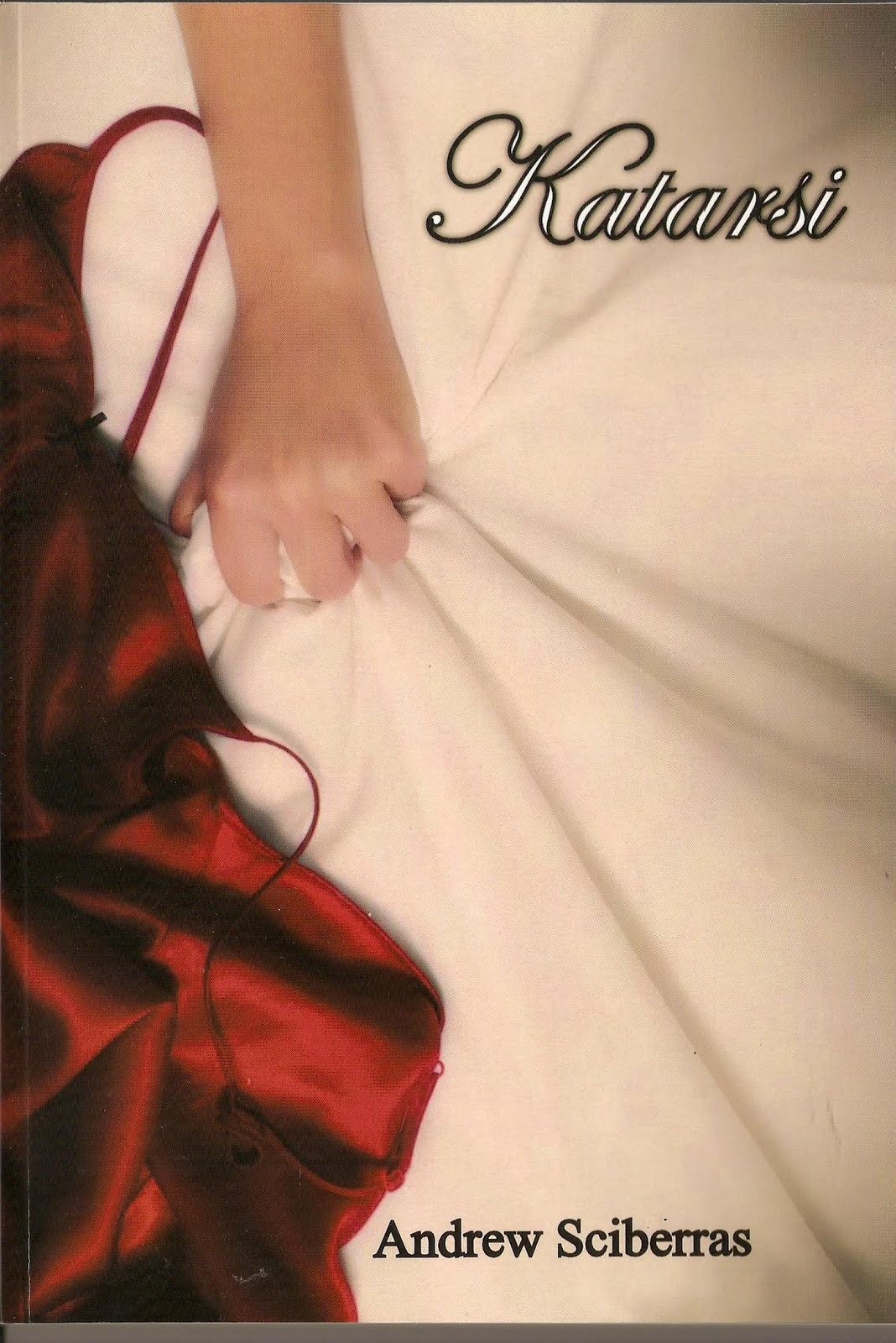
KATARSI (2011) ta' Andrew Sciberras huwa ġabra ta' 51 poeżija. L-istil ta' Sciberras (membru tal-Għaqda Poeti Maltin) huwa wieħed modern: juża l-vers ħieles, ir-rimi interni, għandu ħakma tajba ferm tal-ilsien Malti u jħaddem metafori mill-isbaħ għalkemm xejn sempliċi. KATARSI għandu Daħla minn Achille Mizzi li jikteb hekk: "L-għaġna mentali ta' Sciberras turina li minn banda jħoss ġibda kbira lejn dak li hu stramb, eċċentriku u eżoteriku [...] u, saħansitra jidher li jinnamra anke mal-okkult [...] Mill-banda l-oħra, donnu biex jibbilanċja għandu interess, impenn u involviment li juri ħerqa, imħabba u kompassjoni lejn l-umanita' li ssofri u juri qilla u intolleranza kontra l-inġustizzji li d-dinja tagħna hija miżgħuda bihom." Din hija s-sitt ġabra ta' poeżiji ta' Sciberras wara Samsara, Noti tad-Demm, Waqtiet fis-Skiet, Mill-Eżilju ta' Ruħi u Traġitti (koawturat ma' Patrick Sammut). Katarsi huwa mżewwaq b'ritratti ta' Aaron Bonnici. Għal min hu interessat jakkwista kopja jista' jikteb direttament lill-awtur fuq artist@melita.com


Anki Omar Seguna huwa membru tal-Għaqda Poeti Maltin. Din hija t-tieni ġabra tiegħu wara li fl-2001 ħareġ Mal-Ħoss Qawwi tar-Ragħad. 24, Triq Ħad-Dwieli (2011) jiġbor fih 81 poeżija. Għandu Introduzzjoni minn Mario Azzopardi li jikteb hekk: "L-esperimentazzjoni grafika f'din l-antoloġija hi punt ta' referenza li jolqot. L-ewwel tentattivi tal-awtur kienu diġa' dehru sporadikament fl-ewwel antoloġija tiegħu [...] imma issa daħlet bixra kinetika aktar koreografata u aktar konspikwa. Forsi anki aktar "teatrika", sal-punt interattiv jew immersiv: hemm strofi inversi li biex taqrahom trid taqleb il-ktieb rasu 'l isfel u oħrajn li jridu jinqraw f'mera biex jingħarfu. Bħala estetika, din hi testimonjanza li Seguna qed jagħmel sforzi konxji biex ivarja (anki radikalment) ir-riċetta konvenzjonali li għadha taħkmu." Għal min jixtieq jakkwista kopja tal-ktieb jista' jikkuntattja lill-poeta fuq omarseguna@gmail.com


SPIRAL (KKM, 2011) hija t-tieni ġabra poetika ta' Joe Saliba wara li fl-1995 ippubblika Vjaġġ. SPIRAL jiġbor fih 133 poeżija u mal-201 ħajku. Għandu żewġ daħliet mill-pinna tal-Prof. Joe Friggieri u r-Rev. Prof. Peter Serracino Inglott. Jispikka l-element liriku fil-versi ta' Saliba. Serracino Inglott jikteb hekk: "Naħseb li hija din il-viżjoni tal-eżistenza bħala passaġġ minn post jew qagħda għal post ieħor jew qagħda oħra illi kważi jġiegħel lil Saliba jkompli jikteb il-poeżija minkejja l-impenji l-oħra li ħafna nies forsi jqisuhom aktar siewja." Joe Friggieri jikteb hekk: "Għadek issib hawnhekk it-taħlita tar-realta' mal-ħolm, tad-dinja kif inhi mad-dinja tat-tfal mad-dinja tal-adulti, tal-innoċenza mal-esperjenza, tal-azzjoni mar-riflessjoni. Għadha tinħass ir-rieda tal-poeta li jperreċ ruħu, li jiddeskrivi bl-akbar reqqa t-tqanqiliet, l-emozzjonijiet, ix-xewqat, it-tamiet u l-aspirazzjonijiet tiegħu, flimkien mat-tiġrib li jgħaddi minnu."

IL-PROŻA:


Carmel G. Cauchi kiteb u ppubblika poeżiji, kotba għat-tfal u anki novelli għall-kbar. Mill-Ġnejna ta' Tfuliti (Merlin, 2011) huwa awtobijografija li tmexxina mis-sena 1950 (bejn wieħed u ieħor), jiġifieri minn meta kien jattendi l-iskola tan-nuna, sas-sena 1962, meta l-awtur daħal jaħdem bħala emergency teacher. Hekk hemm miktub fuq il-qoxra tal-ktieb: "F'dan il-ktieb jirrakkonta fatti - drawwiet u ġrajjiet li seħħew tassew. Cauchi joħodna lura fi żmien tfulitu, fis-snin ħamsin u sittin bikrin, biex miegħu nqallbu l-album tat-tifkiriet. Jistedinna ngħaddu miegħu mill-iskola tan-nuna għal dik primarja u mbagħad il-Liċeo. Idaħħalna fid-dar qadima ta' tfulitu u jlaqqagħna ma' qrabatu. Jaqsam magħna l-istil ta' ħajja sempliċi li għex fi tfulitu bil-ħelu u l-morr tagħha.
Dan huwa ktieb li jappella għall-qarrejja kbar li għexu dawk is-snin għax iġeddilhom it-tifkiriet. Imma jappella wkoll għall-qarrejja żgħar għax jurihom kemm it-tfulija tal-imgħoddi kienet differenti minn dik tal-lum." Il-ktieb huwa mżewwaq mit-tpinġijiet sempliċi, nostalġiċi u mill-isbaħ ta' Frank Schembri.


Għadu kemm ħareġ IL-MALTI LXXXII (L-Akkademja tal-Malti/KKM, 2011), edizzjoni kritika/riċerkata. Fih wieħed isib kitbiet riċerkati ta' Godfrey Wettinger, Carmel Cassar, Anna Borg Cardona, Stanley Fiorini, Reno Fenech, Olvin Vella, Horatio Caesar Roger Vella, Emanuel Psaila u Olivia Borg. Naqraw dwar il-kultura orali f'Malta qabel il-wasla tal-Ordni; il-Malti fi żmien il-Kavallieri ta' San Ġwann; l-għanjiet Maltin li ġabar Alberto Fava; il-Kantilena ta' Pietru Caxaru, imma anki dwar uliedu u omm uliedu; il-prietki bikrin bħala għajn ewlenija għall-istorja tal-Malti; Vassalli u l-ambjent Borgian; Franġisku Saverju Attard u l-festa ta' Marija Bambina 1918; il-letteratura u l-politika f'rabta ma' Fil-Parlament ma Jikbrux Fjuri; u l-poeżija ta' Maria Grech Ganado.

Il-biċċa l-kbira ta' dawn il-pubblikazzjonijiet se tiġi ttrattata f'aktar dettall aktar 'il quddiem fuq il-blog tiegħi www.pagnawarapagna.blogspot.com